November 12, 2024
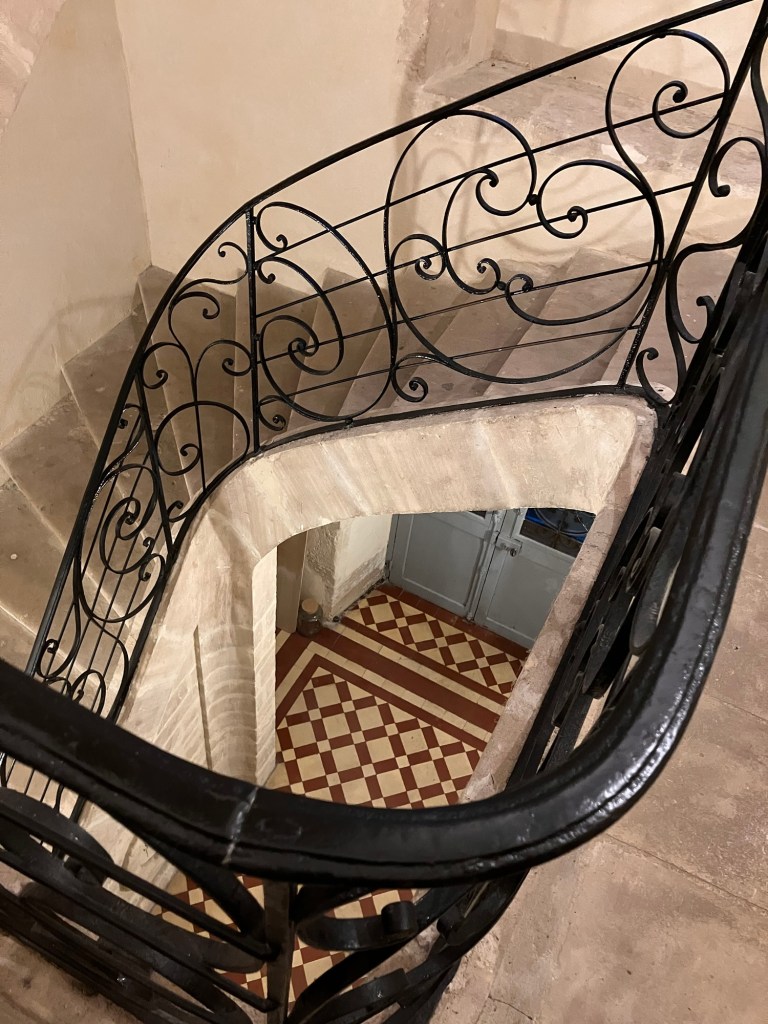
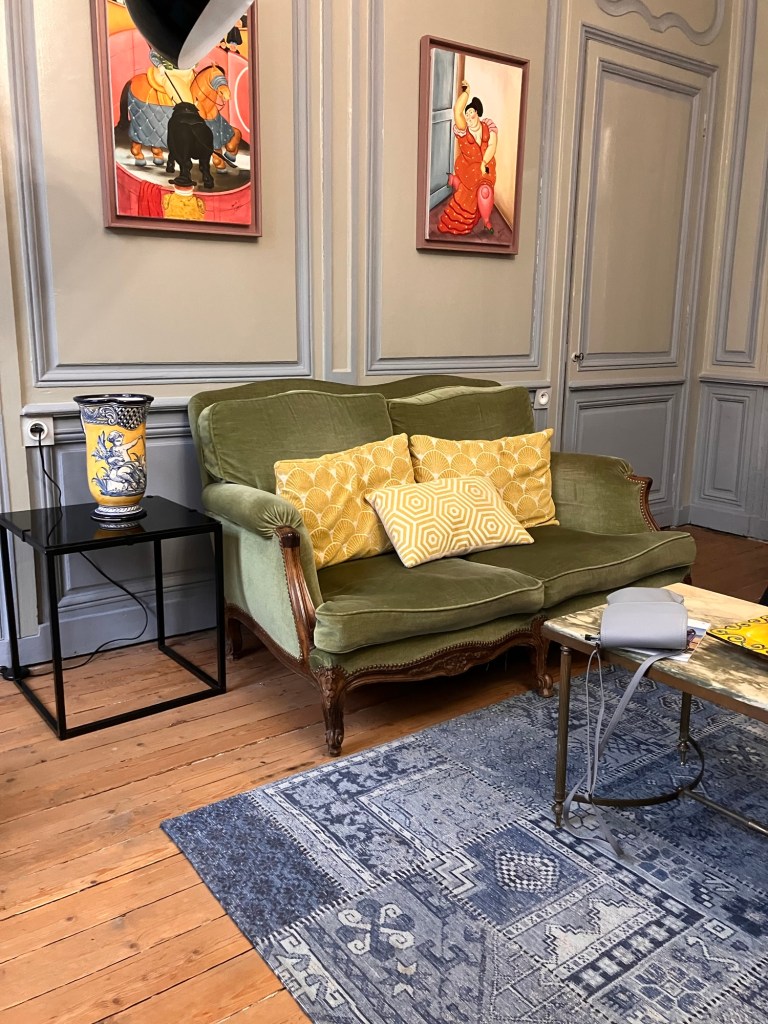
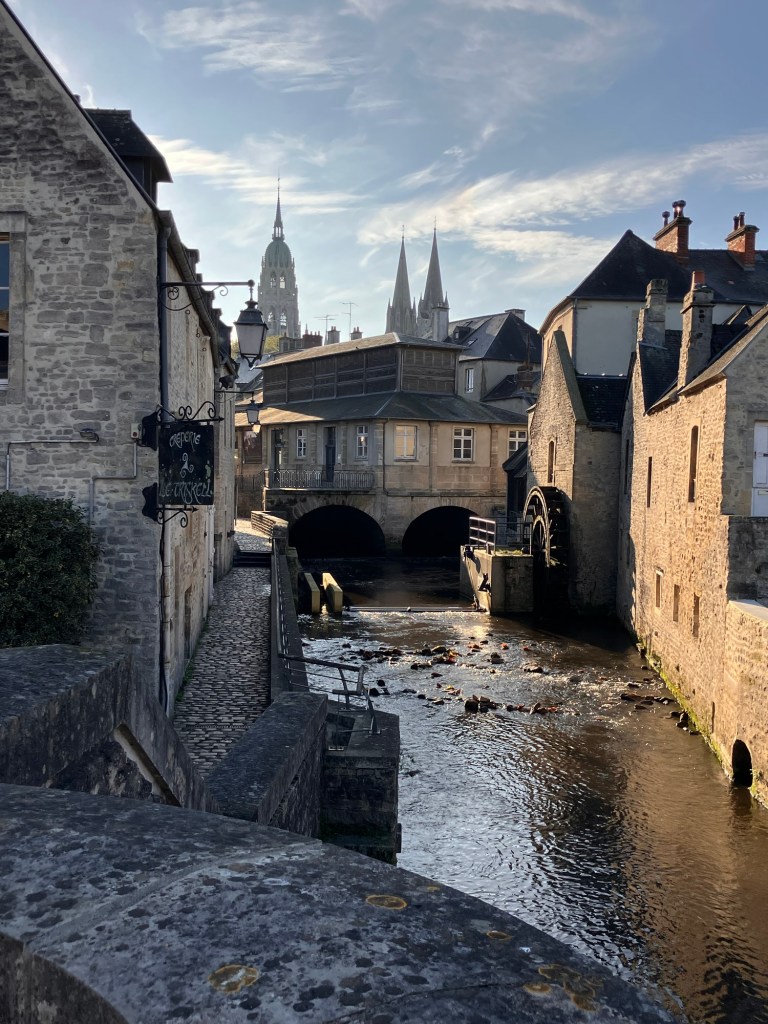
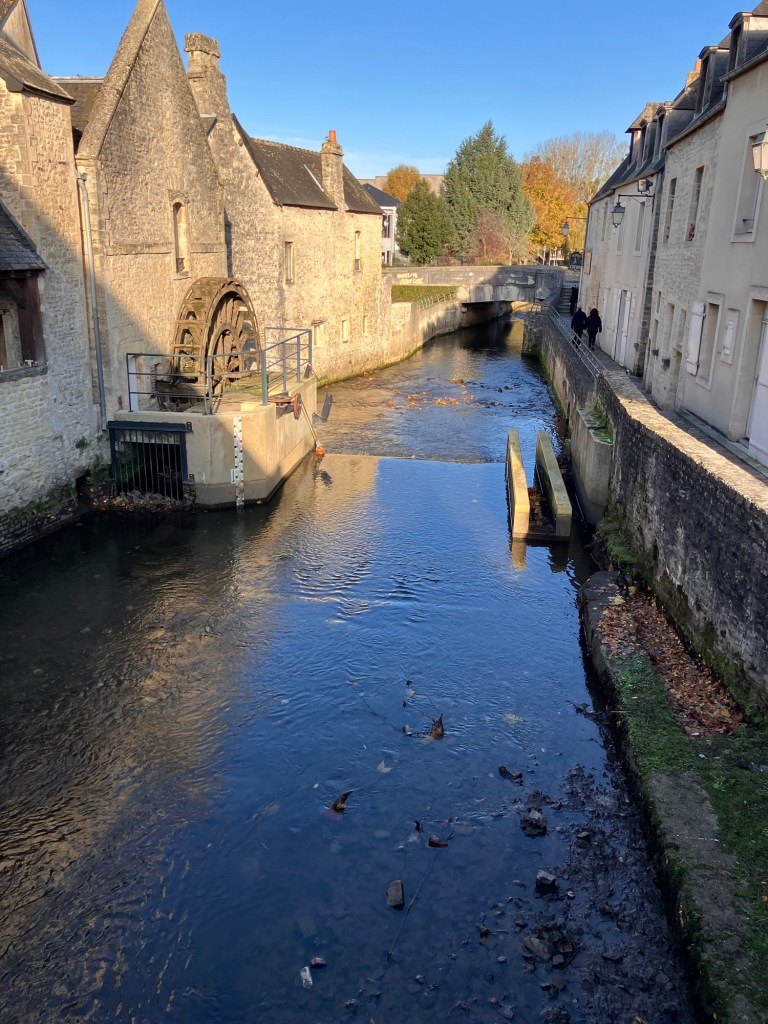
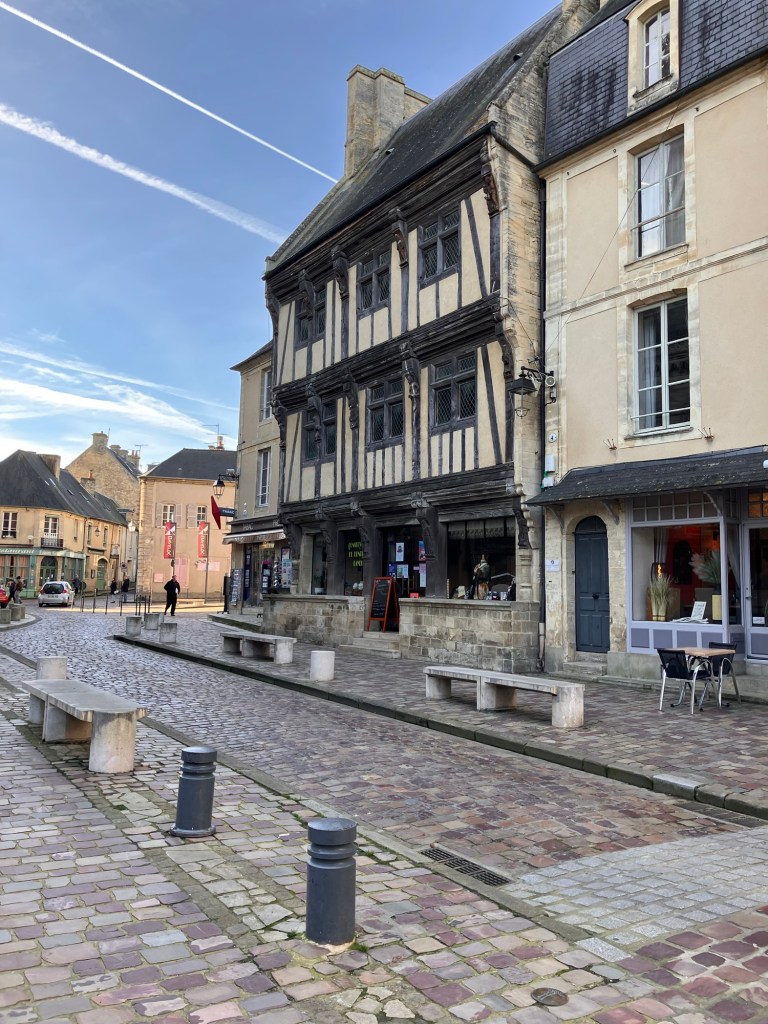
Our guide, Johann, picked us up early from Le Grand Hotel d’Argouges. Our Airbnb had been a 15th century hotel turned into private flats. It was grand in that it was old with large rooms, high ceilings, and interesting architectural features. Outside on the street side the building was timber frame; inside, in the courtyard was stone. We could very well imagine the Nazi’s storming up and down the 20 stone steps up to the 1st floor during the 40’s when Germany occupied so many cities in Normandy. Bayeux, where we made our home base for 7 nights, is one of the few towns that was not damaged during World War II due to the German troops fleeing when the allies landed.





We met Johann on our 2nd day in Bayeux when we arranged a full day D-Day excursion. Unlike the typical D-Day tours he doesn’t take his people to museums and such; he prefers to educate by connecting stories to real people and events during the war. Museums can be explored on your own, he suggests; with a car rental. Johann is an expert on history, especially World War II. His knowledge is impressive and extensive.
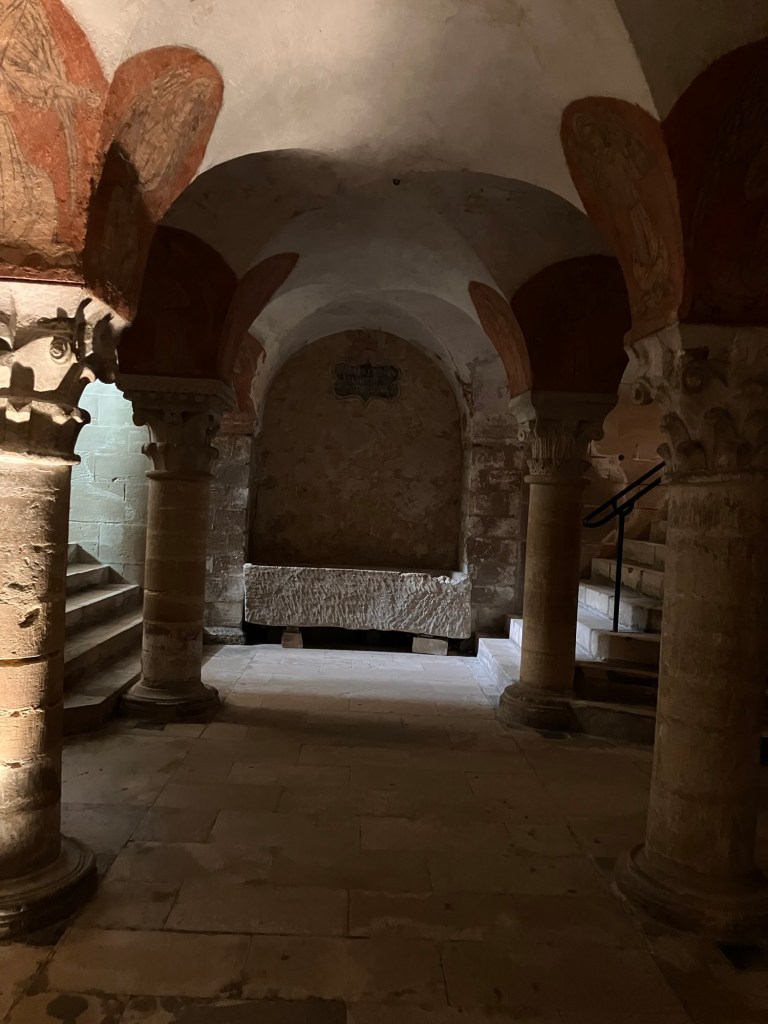
Johann was always on call for us during our stay in Bayeux, ready to answer any question or make suggestions. He gave us insightful information on what to look for when visiting cemeteries and monuments and little known facts about places we visited on our own. Thanks to him we went in the dimly lit doorway down to the crypt of the cathedral in Bayeux where centuries old frescos lined the walls and tombs of people, unknown to us, lay from 1500s.



To see the WWII cemeteries and museums spread along the coast we rented a car for 2 days and were on the go from morning til night. Our limited mileage on the rental wouldn’t get us to Mont Saint Michel but wouldn’t you know it, Johann just happened to have a day off to take us there. He drove and some of us dozed for the 1 1/2 hour early morning drive while Val peppered Johann with questions ranging from French culture and tradition to where to find the most authentic Normandy products.
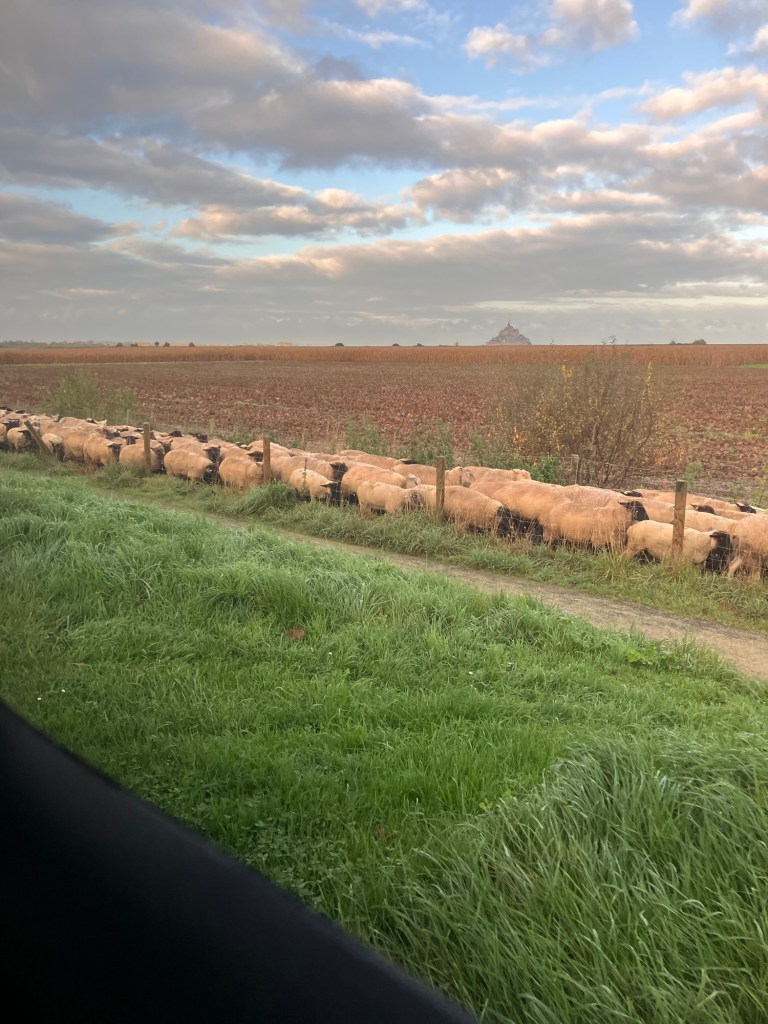
Soon before we arrived at Mont Saint Michel we could see her from the distance but we came to a sudden stop. Seems a herd of sheep were crossing the road in front of us. With the help of a farmer and his dog, they neatly filed down the side of the pasture.
We arrived at a large parking lot and from there walked approximately 10 minutes to a tram that would take us to Mont Saint Michel in about 20 minutes; you could walk the whole way from the parking lot if you wanted (approx. 35 minutes total). Since it was early in the day there was no line for the tram and also plenty of seats – not so much on the return trip.
Another 5 minute walk from the tram drop off, we arrived at the entrance of the commune. We passed a few coffee shops and restaurants and then started our assent, pausing occasionally to see the view of the coastline from the walkways going up. I used the excuse of taking a picture of the view to catch my breath. On one stop I got separated from Val, our niece Liz, and Johann. I had to phone Val to see where they disappeared to. He said they were at the top of the stairs…. I gazed up to several more scary looking flights and headed up. I incredulously wondered how they managed to get so high up so quickly; I still didn’t see them on the walkway above. I actually climbed several more flights of stairs thinking they went up ahead when a kitten came bounding down the stairs toward me and we startled each other (no, didn’t get a picture). Right after that I heard Val call to me from below. They had only gone around a little corner hidden from sight. No worries, there were still more flights of stairs to come.
Johann left us at the entrance to the abbey and we arranged to meet him after our visit. Licensed tour guides are not allowed in the Abbey. After we had our entrance tickets scanned, we were informed (after I asked) that we had 90 more stairs to go.
A little research tells me “the granite rock of Mont Saint Michel was originally known as Mont Tombe. In the year 708, the archangel Michael appeared in a dream-vision to Saint Aubert, bishop of Avranches, and asked him to build a sanctuary in his name. In 966, a community of Benedictines established itself and built the first church. At the same time, a village began to develop below the Mount to welcome the first pilgrims” (ot.montsaintmichel.com).
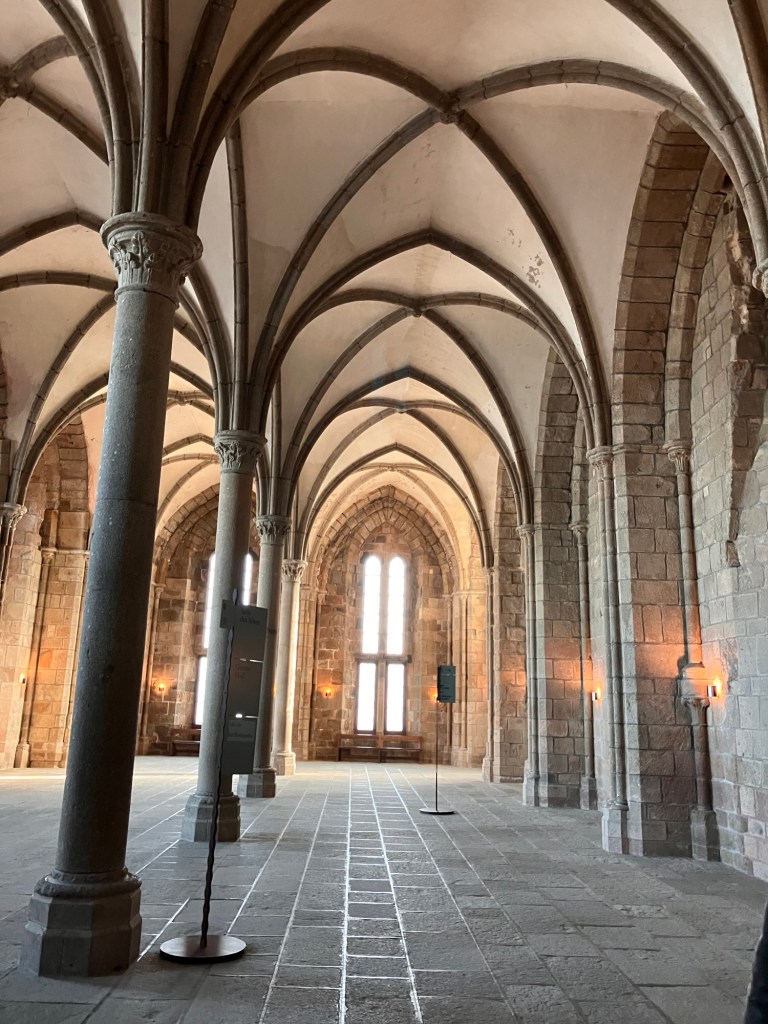
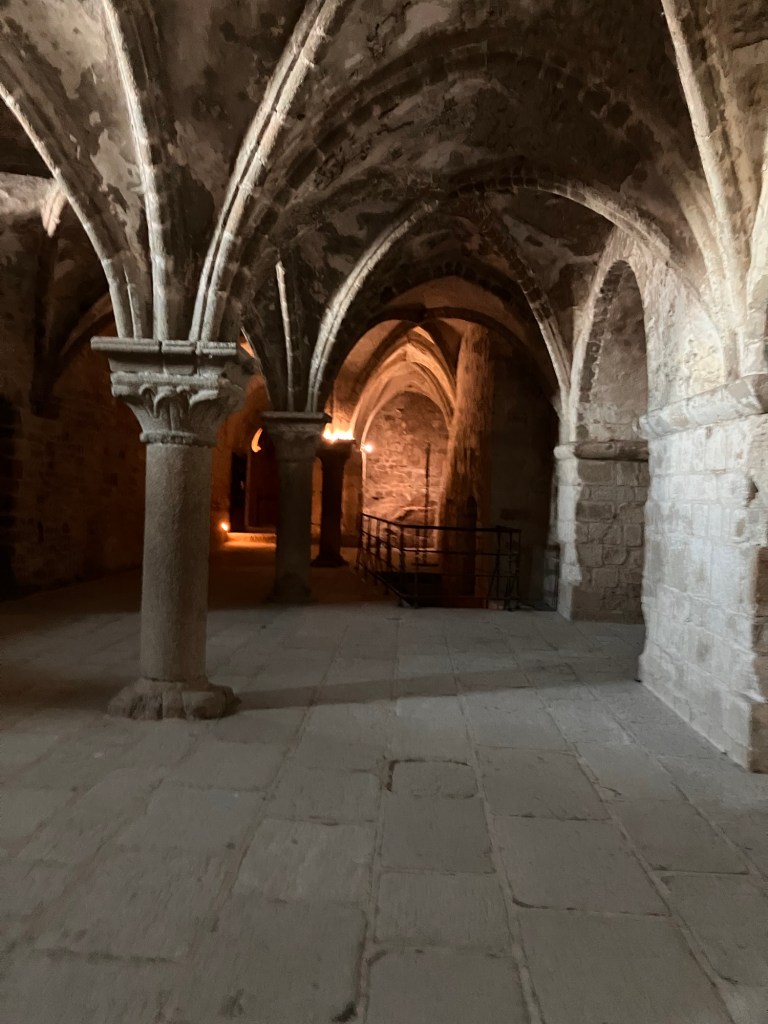
We spent a little over an hour wandering through the vast emptiness of these cold stone walls and marveling at the size of the rooms, wondering how they managed the huge fireplaces and getting lost in the labyrinth of corridors and stairs. If not for the signage, we might be members of the fraternity living there now.


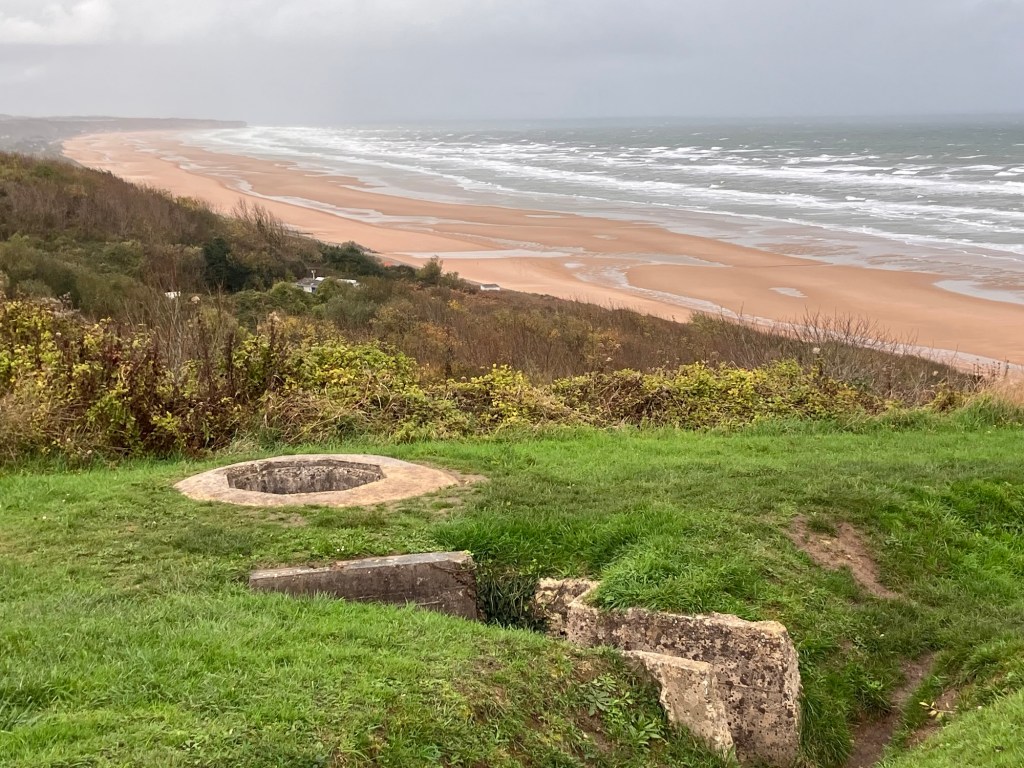
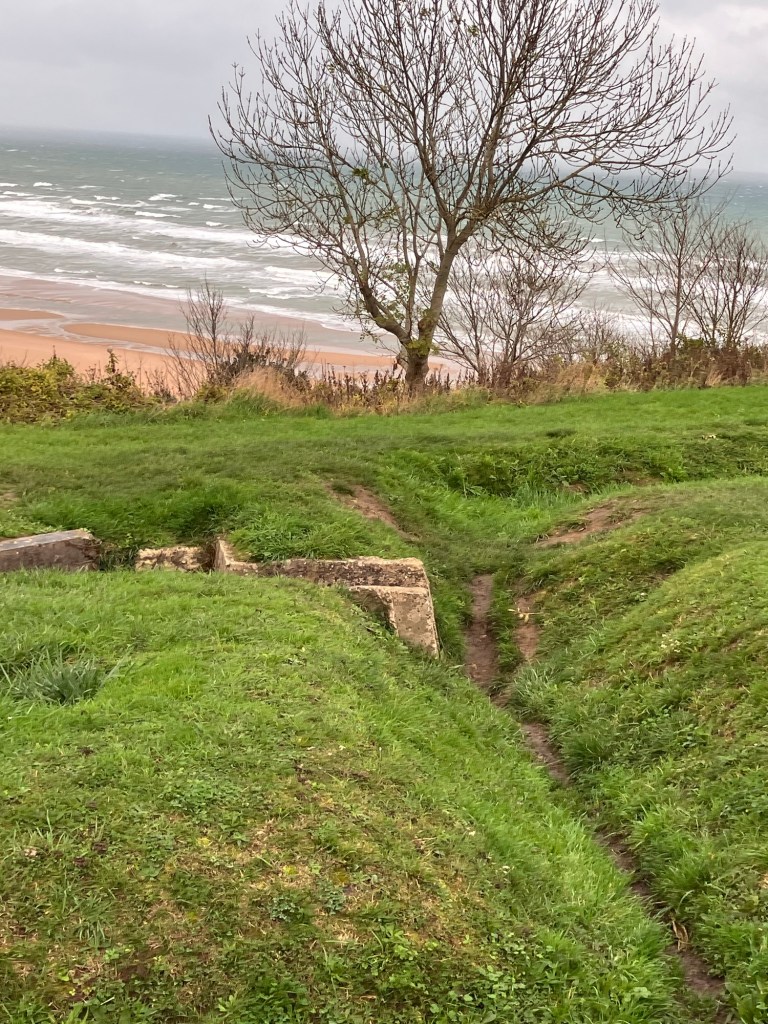
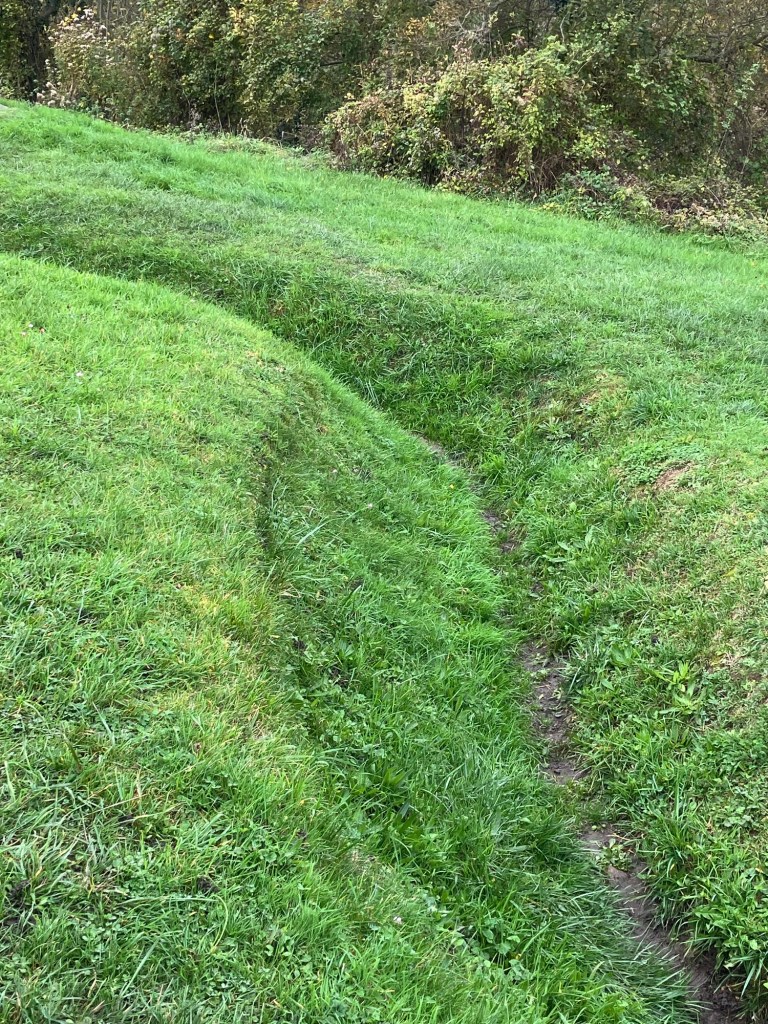
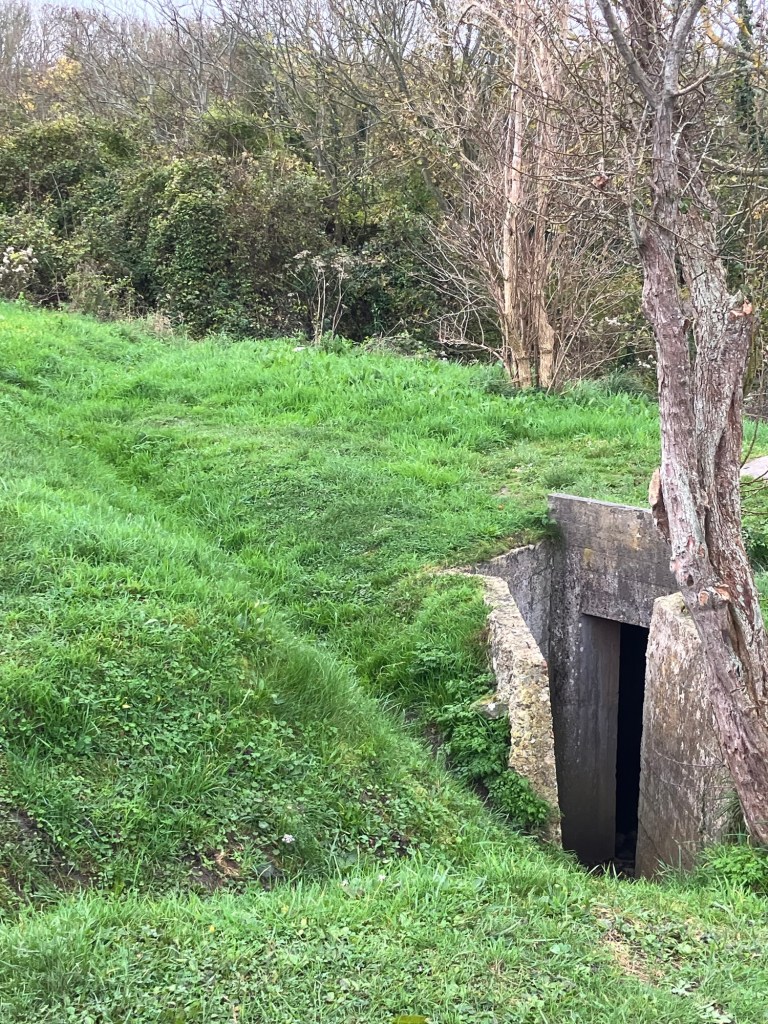
On the drive back to Bayeux, Johann asked us if we’d like to see a secret spot. Of course, we were all ears and eager to know what this was about. We drove back to Omaha Beach to an area we had visited before, but this time we turned down some unfamiliar road that turned into a dirt road and we eventually parked to the side near a farmers field. We traipsed along the edge of the field until suddenly Omaha Beach and the wild waves and wind suddenly came into view. Somehow we were up above on the bluff with an eagles eye (or German view) of the whole beach. We could imagine the artillery guns pointed directly at the troops as they stormed the beach. Johann had earlier told us the story of Jimmie Monteith who posthumously was awarded the Medal of Honor. You can read more about him in Wikipedia but this was the area of his heroic feats and we saw and stood by the original trench and German machine gun placements that are still intact. This is not on the D-Day tours because it is on private property. The sight of this place – though somber – remind us of the bravery and hardship of the allies that day in 1944. The ride back to town was quiet as we reflected on the sacrifices made by so many that fateful day.


 Where2Next
Leave a comment